LIVE DIY: Multi Switch Control Buzzer

The post LIVE DIY: Multi Switch Control Buzzer appeared first on Electronics For You.


View more at https://www.electronicsforu.com/videos-slideshows/live-diy-multi-switch-control-buzzer.

Credit- EFY. Distributed by Department of EEE, ADBU: https://tinyurl.com/eee-adbu
Curated by Jesif Ahmed

Often wrongly interpreted: Terminals, isolating links and bars in wiring diagrams and schematics

Terminals and other connecting elements, such as CT/VT shorting and isolating links, test blocks, and earthlings, often need to be better understood in analysing wiring diagrams and schematics. This can... Read more

The post Often wrongly interpreted: Terminals, isolating links and bars in wiring diagrams and schematics appeared first on EEP - Electrical Engineering Portal.


View more at: https://electrical-engineering-portal.com/terminals-isolating-links-bars-wiring-diagrams-schematics Credit- EEE - Electrical Engineering Portal. Distributed by Department of EEE, ADBU: https://tinyurl.com/eee-adbu
Curated by Jesif Ahmed.

Often wrongly interpreted: Terminals, isolating links and bars in wiring diagrams and schematics

Terminals and other connecting elements, such as CT/VT shorting and isolating links, test blocks, and earthlings, often need to be better understood in analysing wiring diagrams and schematics. This can... Read more


The post Often wrongly interpreted: Terminals, isolating links and bars in wiring diagrams and schematics appeared first on EEP - Electrical Engineering Portal. Credit: EEP- Electrical Engineering Portal. Visit:


http://dlvr.it/T773Dw

upliance.ai’s ChefGPT Is Here To Up Your Culinary Skills

upliance.ai is on a mission to make cooking easy for everyone by leveraging large language models for recipe generation via its Cooking Assistant.

The allure of Korean Bibimbaps featured on Netflix’s K-Dramas and Instagram food reels has inspired many to revolutionise their kitchens in pursuit of restaurant-quality home-cooked meals. After spending hours scrolling for the perfect recipe and ensuring the ingredients are in the correct proportion, the reality of a sink full of dishes often dampens these ambitious plans.

IIT Bombay alumni, Mahek Mody and Mohit Sharma, have developed a solution to alleviate these woes with upliance.ai’s Cooking Assistant, which merges technology with the culinary arts, enhancing the cooking experience through artificial intelligence. Designed, marketed, and sold by the startup for ₹29,999, specifically for Indian kitchens, the Smart Cooking Jar features IP54 water and masala resistance, safety sensors, and automatic heat cutoff mechanisms for functions like automated cutting, chopping, stirring, and cooking.

The smart jar can perform almost 16 cooking functions with a single blade, equipped with a thermal sensor and a heating element. Mody explains, “We have a single blade with slightly different contours for various cuts. The control over the blade allows it to perform multiple types of cuts without the need to switch blades for different tasks. The thermal sensor is a crucial part of our patented method for accurately predicting sauce thickness and cooking progress. We also harness data from blade force and machine vibrations during cutting and cooking to optimise results. Our LLM rapidly provides cooking recommendations, enabling swift decision-making in the kitchen.”


WHERE IS THE REST OF THIS ARTICLE'S CONTENT?

This is PREMIUM content, which means that only
REGISTERED users of our website can read it, by logging in.

If you ARE a registered user, CLICK HERE to login.
Else, CLICK HERE to register for FREE!

The post upliance.ai’s ChefGPT Is Here To Up Your Culinary Skills appeared first on Electronics For You.


View more at https://www.electronicsforu.com/india-corner/upliance-ais-chefgpt-is-here-to-up-your-culinary-skills.

Credit- EFY. Distributed by Department of EEE, ADBU: https://tinyurl.com/eee-adbu
Curated by Jesif Ahmed

LED Driver Reference Design For Automotive Lights

The design’s adaptability and robust features make it a good choice for developers looking to create reliable, dynamic lighting solutions in automotive and other demanding industrial environments.

The automotive lighting industry faces increasingly sophisticated requirements for dynamic performance in tail lamp systems. In response, this reference design introduces a comprehensive solution tailored for tail lamps in vehicles, incorporating advanced components to manage and enhance functionality. This holistic approach to tail lamp design includes the integration of a stop lamp (SL), turn lamp (TL), and side mark lamp (SML), each independently driven by one of three MPQ7221 devices. This reference design is ideally suited for use in automotive tail lights and turning lights and extends to broader applications in automotive power systems and even industrial systems. 

The reference design by Monolithic power consists of the MPQ7221, a pivotal element is a 16-channel current sink LED driver. It supports a broad input voltage range from 4.5V to 16V, catering to diverse automotive power systems. Each channel’s LED current can be precisely controlled up to 80mA through an external resistor, allowing for detailed customization of the light output. This driver also offers sophisticated control features including 6-bit analog dimming and 12-bit pulse-width modulation (PWM) dimming per channel. These features are vital for achieving the desired visual effects and intensity levels in automotive tail lights, particularly as they allow for adjustable PWM dimming frequencies at 220Hz, 250Hz, 280Hz, or 330Hz.

It enhances system reliability and performance with its integrated fault detection capabilities, such as LED open and short protection, under-voltage lockout (UVLO), and over-temperature protection (OTP). These safeguards ensure that the lighting system operates effectively under various conditions without failure. Additionally, the device features an I2C interface with up to 10 different configurable addresses via an external resistor, facilitating complex and dynamic lighting effects while enabling communication with other system components.

The design includes a buck converter (MPQ4323) and a low-dropout (LDO) regulator (MPQ2013A) for stable and efficient power supply. A microcontroller unit (MCU) (KEA8) directs the tail lamps’ dynamic aspects, syncing lighting changes based on vehicle behavior and driver inputs. The chosen packaging for the design is a QFN-24 (4mm x 4mm) with wettable flanks, not only facilitates robust soldering but is also AEC-Q100 Grade 1 certified, underscoring its suitability for harsh automotive environments. This packaging ensures that the device can withstand the thermal and mechanical stresses typical in automotive applications.

Monolithic Power has tested this reference design. It comes with a bill of materials (BOM), schematics, etc. You can find additional data about the reference design on the company’s website. To read more about this reference design, click here.

The post LED Driver Reference Design For Automotive Lights appeared first on Electronics For You.


View more at https://www.electronicsforu.com/electronics-projects/led-driver-reference-design-for-automotive-lights.

Credit- EFY. Distributed by Department of EEE, ADBU: https://tinyurl.com/eee-adbu
Curated by Jesif Ahmed

Cost-Effective And Energy-Efficient MCUs

The STMicroelectronics’s microcontrollers reduce energy consumption by 50%, minimize battery waste, and enable devices to run on harvested energy like solar power.

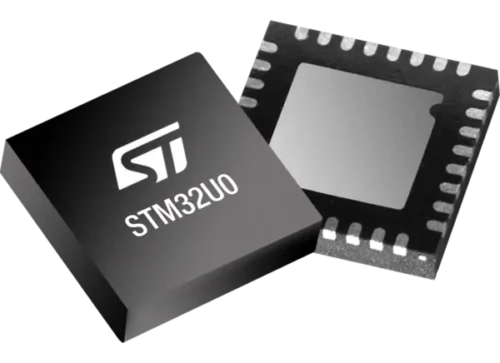
STM32U0

STMicroelectronics, a global semiconductor company, has launched a new line of cost-effective and energy-efficient microcontrollers (MCUs). The STM32U0 MCUs can cut energy usage by up to 50% compared to previous versions, leading to fewer battery changes, reduced environmental impact from discarded batteries, and enabling more devices to operate on energy harvested from sources like small solar cells.

As the world focuses on sustainability, technologies used in smart buildings and Internet of Things (IoT) applications play essential roles in efficient energy and resource management. STMicroelectronics’ microcontrollers are at the core of smart sensors and actuators, facilitating data collection, processing, and analysis and communicating with cloud-based applications. With billions of these MCUs already in use, the growth of smart environments will likely increase their demand significantly.

The microcontrollers usher in a significant improvement in energy efficiency thanks to their innovative design techniques and advanced manufacturing processes. Key features include deficient power consumption in standby mode and exceptional wake-up capabilities, which allow the MCU to maximize time spent in energy-conserving sleep modes, thus reducing overall energy use.

The company claims that a prominent customer in the security systems sector is leveraging the MCU in their security cameras to activate the device upon motion detection, enhancing surveillance capabilities while conserving energy. Another client has developed durable smoke detectors using the STM32U0. Additionally, Ascoel has incorporated this microcontroller into their water meters to efficiently handle energy-sensitive functions.

The microcontrollers provide an LCD segment display controller, helping devices like water meters, thermostats, smart retail labels, access-control panels, and factory automation systems reduce PCB costs. The MCUs include analogue peripherals such as analogue-to-digital converters, digital-to-analogue converters, operational amplifiers, and comparators. An on-chip system oscillator helps cut the bill of materials and save PCB space.

Developers have access to up to 256KB of Flash memory, options for up to 81 pins, and a core speed of 56MHz—suitable specifications for this class of device.

The post Cost-Effective And Energy-Efficient MCUs appeared first on Electronics For You.


View more at https://www.electronicsforu.com/news/cost-effective-and-energy-efficient-mcus.

Credit- EFY. Distributed by Department of EEE, ADBU: https://tinyurl.com/eee-adbu
Curated by Jesif Ahmed
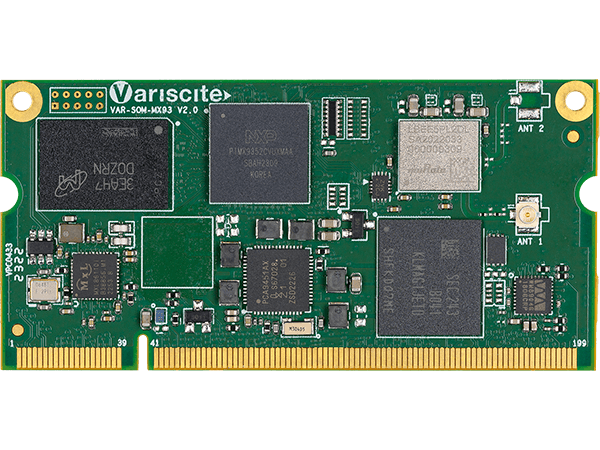
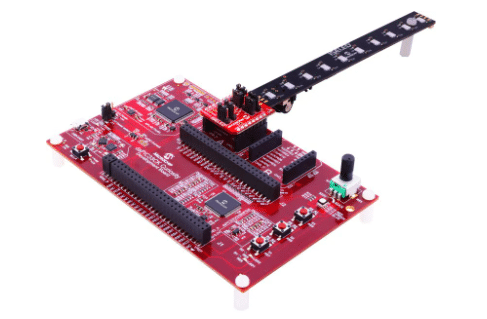
Reference Design For Automotive Interior Lighting 

Discover the benefits of this approach, which enhances vehicle ambience and communication and tackles manufacturing challenges and ensures a blend of aesthetic appeal, functionality, and long-term reliability in automotive design.

The evolving automotive industry continuously seeks innovative ways to enhance vehicle aesthetics and functionality, which is reflected in the sophisticated use of RGB LED lighting within car interiors. These LEDs are pivotal in elevating the ambience, brand differentiation, and interactive communication with the driver. For example, changing dashboard lights can indicate the activation of autonomous driving modes or alert the driver to specific attention needs. This dynamic application necessitates the integration of numerous RGB LEDs throughout the vehicle’s dashboard and cabin areas.

This integration presents significant design and manufacturing challenges. Traditionally, LEDs’ color accuracy varies, requiring either a meticulous sorting process to ensure uniformity or on-the-line calibration—both of which are time-consuming and costly. Furthermore, LEDs are prone to performance degradation due to temperature variations and aging, complicating long-term maintenance and functionality.

Implementing the ISELED (Intelligent Smart Embedded LED) technology represents a transformative shift in addressing these issues. ISELEDs are pre-calibrated at the vendor level, dramatically simplifying manufacturing processes by eliminating the need for in-line calibration and reducing variability among LEDs. The dsPIC33CK Digital Signal Controller (DSC) family from Microchip Technology further enhances the ISELED implementation. These controllers are designed to optimize system costs and simplify circuit design. Key features include 3V operation compatible with 5V inputs, eliminating the need for additional components like glue logic or level shifters. 

Optimizing Performance and Safety

The dsPIC33CK DSCs are also highly cost-effective, offering various models with scalable memory options ranging from 32KB to 1024KB, and they include robust communication capabilities such as CAN-FD and LIN, essential for automotive applications. These DSCs support a low overhead ISELED implementation by utilizing on-chip Core Independent Peripherals (CIPs), which reduce CPU load by handling specific tasks independently. A specialized 5-bit hardware SPI mode and flexible hardware CRC are instrumental in streamlining the frame creation process for ISELED, further offloading CPU tasks. Moreover, the increased throughput for ISELED animations and light effects is achieved through Direct Memory Access (DMA), enhancing the overall visual experience without burdening the CPU.

Regarding functional safety, the dsPIC33CK DSC family is designed to meet the rigorous ISO 26262 standards, targeting an ASIL B safety level. This ensures that the lighting system adheres to the highest safety criteria, which is crucial for automotive applications. Robust capacitive touch sensing also adds a layer of interactive capability, enhancing user experience. Combining ISELED technology with dsPIC33CK DSCs offers a cost-effective, optimised solution that addresses the critical challenges of RGB LED applications in automotive environments. This integration simplifies manufacturing and ensures the longevity and reliability of the lighting systems, making it an ideal choice for future-oriented automotive manufacturers.

Microchip has tested this reference design. It comes with a bill of materials (BOM), schematics, etc. You can find additional data about the reference design on the company’s website. To read more about this reference design, click here.

The post Reference Design For Automotive Interior Lighting  appeared first on Electronics For You.


View more at https://www.electronicsforu.com/electronics-projects/reference-design-for-automotive-interior-lighting.

Credit- EFY. Distributed by Department of EEE, ADBU: https://tinyurl.com/eee-adbu
Curated by Jesif Ahmed
Simpler Control For Shape-Shifting Robots

The MIT team has developed a control algorithm that autonomously teaches a reconfigurable robot to move, stretch, and adapt its shape for specific tasks.

A new machine-learning technique can train and control a reconfigurable soft robot that can dynamically change its shape to complete a task. The researchers, from MIT and elsewhere, also built a simulator that can evaluate control algorithms for shape-shifting soft robots. Credits:Image: Courtesy of the researchers; MIT News

Imagine a shape-shifting, slime-like robot designed to navigate through narrow spaces, with the potential to remove items from the human body. This innovative technology could revolutionize various fields, including healthcare and industrial systems, offering flexible and adaptive solutions. The main challenge is effectively developing a method to control this fluid, jointless machine.

The team at MIT have created a control algorithm that autonomously learns to move, stretch, and shape a reconfigurable robot to accomplish specific tasks, including those that require multiple morphological changes. Additionally, they developed a simulator to test control algorithms on various challenging tasks that demand the robot to alter its shape.

Their method outperformed other algorithms by completing eight complex tasks. For example, the robot adjusted its size and shape to navigate through a narrow pipe and open its lid. Still, in early development, this technique shows potential for creating general-purpose robots that can adapt their forms to accomplish diverse tasks.

Controlling dynamic motion

To control a shape-shifting robot, the team has developed a reinforcement learning algorithm that starts by managing groups of muscles working together rather than individually. This approach uses a coarse-to-fine strategy, where the robot’s movements in an environment are treated like an image. Their model creates a 2D action space from environmental images and uses the material-point method for simulating motion, assigning points over grid-like pixels. This helps the algorithm recognize strong correlations between action points like image pixels, ensuring coordinated movements across different robot parts. The model also predicts optimal robot actions based on environmental analysis, increasing adaptability and efficiency.

Building a simulator

After developing their approach, the researchers created a simulation environment called DittoGym to test it. DittoGym challenges a reconfigurable robot with eight tasks, like weaving around obstacles or mimicking alphabet letters by changing shape. Their algorithm outperformed baseline methods and uniquely succeeded in multistage tasks requiring several shape transformations.

The post Simpler Control For Shape-Shifting Robots appeared first on Electronics For You.


View more at https://www.electronicsforu.com/news/simpler-control-for-shape-shifting-robots.

Credit- EFY. Distributed by Department of EEE, ADBU: https://tinyurl.com/eee-adbu
Curated by Jesif Ahmed
Substation Equipment Maintenance: Often Neglected Until Something Big Drops Dead

The aging process starts the moment new substation equipment is put into service; how quickly it happens depends on a number of factors, including the equipment’s use, the environment, the... Read more

The post Substation Equipment Maintenance: Often Neglected Until Something Big Drops Dead appeared first on EEP - Electrical Engineering Portal.


View more at: https://electrical-engineering-portal.com/substation-equipment-maintenance-often-neglected-until-something-big-drops-dead Credit- EEE - Electrical Engineering Portal. Distributed by Department of EEE, ADBU: https://tinyurl.com/eee-adbu
Curated by Jesif Ahmed.