Lighting Bulbs According to Reflector:
(1) R (Reflector) Type Bulb (Code: R)
- “R” stands for Reflector.
- This light bulb contains a mirrored coating on the back of the light bulb that maximizes the direction of the light which emitted by Bulb.
- Traditionally, inside of R type Bulb was covered with a reflector material coating that used to gather light and cast it away from the bulb. Nowadays, R type bulbs have an evenly frosted coating that works to diffuse light and prevents glare.
- Unlike the PAR bulb, the entire envelope of R type bulb, excluding the base is constructed by using blown glass and the exterior part of the bulb is very smooth. The few components of this bulb which includes a brass base, a thin glass and filament make it lightweight.
- Reflective Coating of Bulb In Reflector (R) or Bulged Reflector (BR) bulbs directs light forward side , while Flood types (FL) bulb spread light and Spot types (SP) concentrate the light.
- Reflector (R) bulbs put approximately double the amount of light (Lumen) on the front central area as General Standard “A” Shape Bulb for same wattage
- Nomenclature:
- Numbers in each code refer to the bulb’s diameter in one-eighths of an inch.
- R20 bulb: 20/8 = 2-1/2″ diameter
- Lighting direction: one direction.
- Bulb Technology: incandescent , LED, tungsten-halogen, CFL

- Application:
- The R type bulb is usually not waterproof but can be used in a fixture protected from the weather as long as it is not sealed.
- Reflector light bulbs are used mainly in recessed Lights for hotels, restaurants, retail and residential lighting.
- R bulbs are ideal for display lights as well as for providing soft ambient and directional light. The right place to use R bulbs is in hallways, in a kitchen, living room, media rooms or pool area.
- R Type floods provide a wider beam angle with a soft edge and are perfect for recessed down lights, track lighting, display lighting and various outdoor fixtures.
(2) BR (Bulged Reflector) Type Bulb (Code: BR)
- BR stands for “Bulged Reflector”.
- The ‘bulge’ allows the light to be distributed in a manner which is very pleasing to our eye.
- R shapes have largely been replaced by the more efficient “bulged reflector” BR shape.
- BR lamps are a new and improved version of the R Type reflector lamp. The primary difference is the “bulge” in the shape of lamp. This shape focuses more light into the beam of light to direct it out of the recessed fixture.
- In traditional, the inside surface of BR bulb is covered in reflector material that is used to gather and cast a wide beam of light away from the bulb.
- It is considered a wide-angle floodlight often exceeding 100-degree beam angles.
- However in LED BR bulbs do not require the reflector material coating.
- These bulbs can have a frosted, clear, or patterned dome-shaped lens that diffuses light and provides a gradual fade into no illuminated areas.
- BR bulbs also produce less shadow compared to PAR bulbs. They have a bit longer than PAR bulbs and tend to protrude from light housings but are used in similar applications, such as track lights, recessed lights, display lights, or can lights.
- As per the comparison to the R20 and BR20, the glass part of BR20 is more curved.
- One disadvantage of the BR lamp is that it’s a little longer than the PAR and MR, which means it tends to sit lower in the recessed fixture and perhaps, protrude from the bottom of the recessed light fixture.
- The light transmission pattern can be clear, frosted, or even patterned.

- Nomenclature: BR20, BR40.
- Numbers in each code refer to the bulb’s diameter in one-eighths of an inch.
- BR20 bulb: 20/8 = 2-1/2″ diameter
- Lighting direction: one direction.
- Bulb Technology: incandescent , LED, tungsten-halogen, CFL
- Application:
- The BR bulbs kind of balloon out of Light fixtures. Often they are bulging down just below the ceiling from recessed fixtures.
(3) MR (Mirror / Multi Reflector) Type Bulb (Code: MR)
- MR stands for “Multi-faceted Reflector”.
- MR Bulb use mirror as a technique for reflecting the maximum light out in the front of a lamp, It help gather light from the filament to create a very concentrated light beam (narrower light beam).
- It is normally used for small lamps. It is the narrowest of the bulb types (2 inches in diameter or less) mostly used as a spotlight.
- MR Lamps provide various beam spread (narrow flood, flood and spotlight).
- LED MR doesn’t require tiny mirrored squares to put the light where we want it to be.

- Nomenclature: MR11, MR16.
- Numbers in each code refer to the bulb’s diameter in one-eighths of an inch.
- MR11 bulb: 11/8 = 1-3/8″ diameter
- Lighting direction: one direction.
- Bulb Technology: incandescent , LED
- Applications:
- It is used for accent and spot lighting in various retail, residential, commercial applications, track lighting and all kinds of display case lighting.
- These bulbs are available in a variety of colors and can be used for many applications, including track lighting, recessed lighting, desk lights, and display case lighting.
- Many MR bulbs operate on low-voltage wiring systems, which makes them great for outdoor and landscape applications such as driveway lights, path lights, gazebo lights, paver lights that have weatherproof housings.
- A light bulb, often a halogen style, that plugs into the socket with two prongs, it’s often used in kitchen settings.
(4) PAR (Parabolic Aluminized Reflector) Type Bulb (Code: PAR)
- PAR means “Parabolic Aluminized Reflector”.
- PAR Bulb uses an aluminized reflector in a parabola shape for directing the light.
- Bulb is covered with a hard glass lens to control the light beam, which is available in a variety of beam spreads from narrow spot to wide flood. This hard glass covering also helps to withstand harsh environmental conditions.
- Parabola shape Reflector (U-shaped) collect and reflect the light out the front of the bulb, produces a tighter and more controlled beam of light than standard reflector bulbs.
- PAR bulbs are commonly used in stage and theatrical lighting, as well as in the home for accent and art lighting. Many halogen spot and flood lights use a parabolic (however this technique is generally not required in LED lamps).
- It is best used for a focused, narrow beam of light.
- Most PARs do not exceed a beam angle of 45 degrees in most cases.
- If brightness is priority in a recessed light, than we need to select a PAR lamp in the appropriate size.
- These bulbs have a shorter body than BR bulbs and usually install flush with ceilings or fixtures, which reduces glare.
- PAR’s look a more modern, and often have a clear lens
- Unlike R Type bulbs, PAR bulbs feature an aluminum reflector with a special pattern of impressions that amplifies and concentrates light in a single area.
- The bulb envelope is made of two pieces, the glass face and the shiny aluminum wall of the envelope. The texture of the bulb will be either rough or textured and the bulb will be heavier than an R Type bulb due to thicker glass construction.
- Both LED PAR bulbs and CFL PAR bulbs are easy to find, though they are not always weatherproof like traditional halogen so be sure to check their IP listing before installing them outdoors.
- This PAR shape is very similar to the R shape and in some cases the PAR and R is interchangeable as per shapes but PAR LED bulbshave a shorter body than R type bulbs.

- Nomenclature: PAR36, PAR20.
- Numbers in each code refer to the bulb’s diameter in one-eighths of an inch.
- PAR20 bulb: 20/8 = 2-1/2″ diameter
- PAR30 bulb: 30/8 = 3-3/4″ diameter
- Lighting direction: PAR illuminates its light in one direction having various Beam Angles.
- 12° to 20° = Spot
- 25° to 30° = Narrow Flood
- 35° to 40° = Flood
- >45° = Wide Flood
- Bulb Technology: incandescent, tungsten-halogen, metal halite and LED.
- Applications:
- PAR Type floods provide a tighter beam angle with a hard edge and act more like a spot light and used both indoor and outdoor applications.
- PAR LEDs are perfect for track lighting, recessed lighting and Down Lighting and flood lights.
- Unlike R or BR bulbs that offer general area lighting, PAR shaped bulbs have more sharply focused light to help highlight specific areas or objects like in indoors to emphasize one area of a room over the rest of the room, or to highlight a piece of art, furniture or retail items in commercial .
- These bulbs come in a variety of “beam angles” or “beam spreads” to meet these highlighting needs; the smaller the beam angle, the smaller an area the light will cover.
- Ceiling Light Fixtures, Flood Light, soft light fixtures, garage security light, kitchen can light.
- These bulbs run on low-voltage and suitable for outdoor fixtures as either spotlights (narrower beam angle) or floodlights (wider beam angle) and other outdoor applications like landscape lighting applications such as architectural lights, driveway lights, path lights, gazebo lights, and paver lights, clothing store, museum and gallery applications..
- They’re commonly found in outdoor emergency light, spot light, or floodlight fixtures but can also be used indoors for track lights, recessed lights, display lights, or can lights.
View more at
https://electricalnotes.wordpress.com/2020/05/02/type-of-lighting-bulbs-shapes-and-sizes-part-3/.
Published by Department of EEE, ADBU:
tinyurl.com/eee-adbu
 There are numerous methods available for controlling DC motors with an Arduino. The L293D is a high current, Quad Half-H driver designed specifically to control stepper motors, DC motors, small solenoids, or any load with a high impedance. One of the main advantages of the L293D is its ability to drive DC motors AND control […]
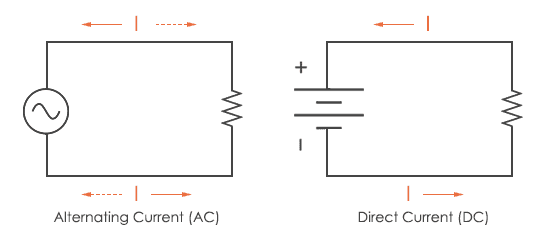 In the previous articles, we discussed electricity as the flow of electric charge and voltage as the force that makes that charge flow. In this article, we will be focusing on the concept of current. It is important to note that there are two kinds of current: Alternating Current and Direct Current. The majority of […]
 An increase in the number of portable electronic devices has subsequently led to a requirement for high-power charging. Foo Leng Leong, senior technical marketing manager, STMicroelectronics, in a conversation with EFY, explains about the company’s latest offering for USB-C type data transfer and charging applications. STMicroelectronics has released a high-power receiver and transmitter that can […]
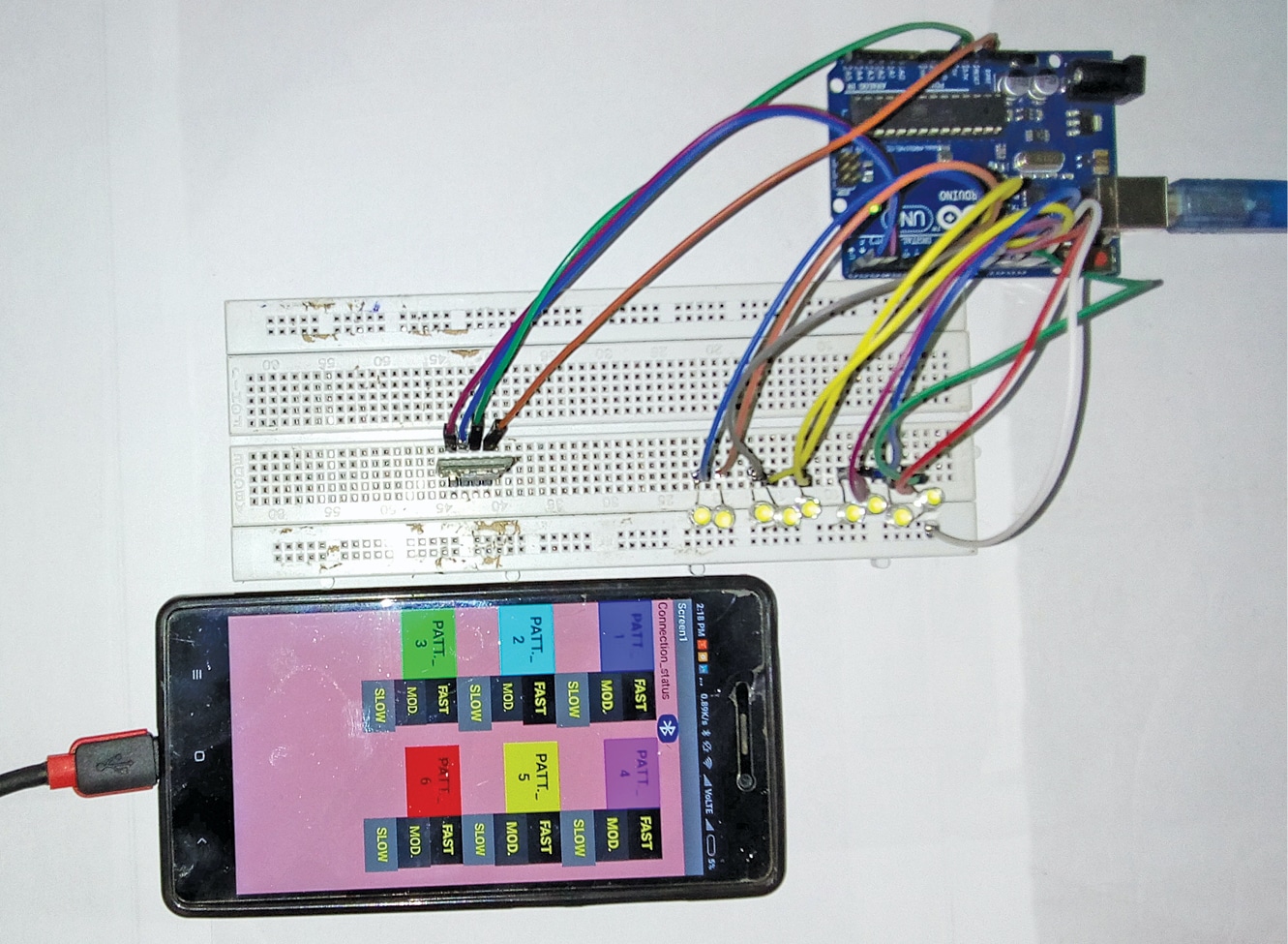 In this project, an Android application is developed to control light animations using six different LED chasing patterns. Additionally, blinking speed of LEDs is also controlled from the smartphone using fast, moderate and slow buttons on the app. The authors’ prototype is shown in Fig. 1. Circuit and working The circuit diagram of the project […]
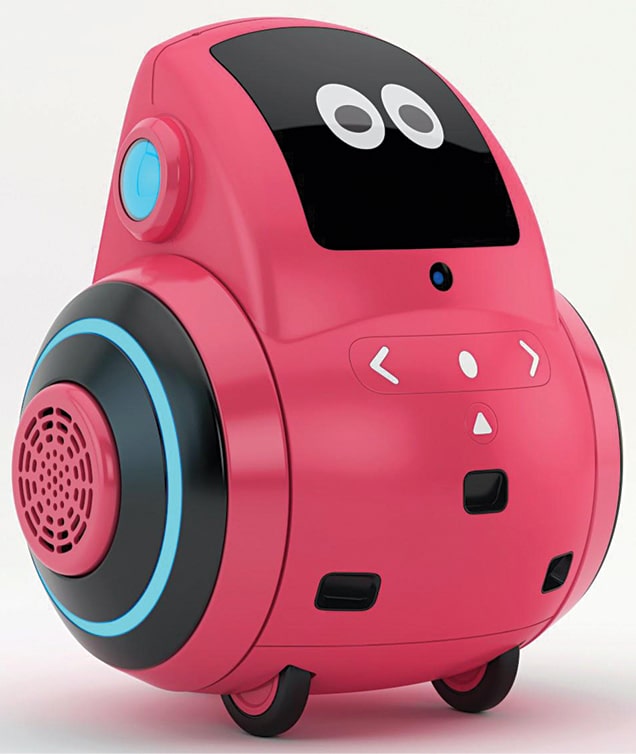 Traditionally, joint families have been a part of Indian culture. But in today’s fast-growing society, disintegration of the joint family system has paved the way for nuclear families. It is no hidden fact that parents tend to spend less time with children due to their busy lifestyles. So how do children get the much-needed attention […]
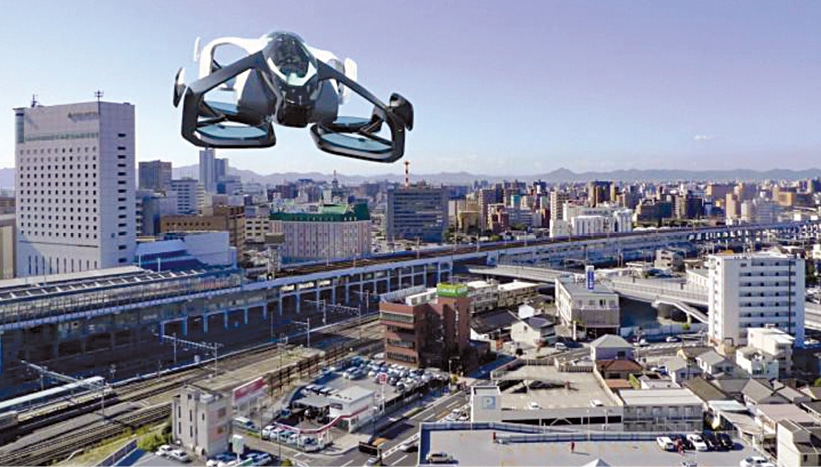 Mobility has expanded people’s ability to move and enriched their lives by providing them with the joy of going farther and manipulating their own way. However, roads are necessary for cars, buses and trains, and airports and runways are required for aeroplanes. But infrastructure maintenance requires a large investment. In emerging countries where population explosion […]